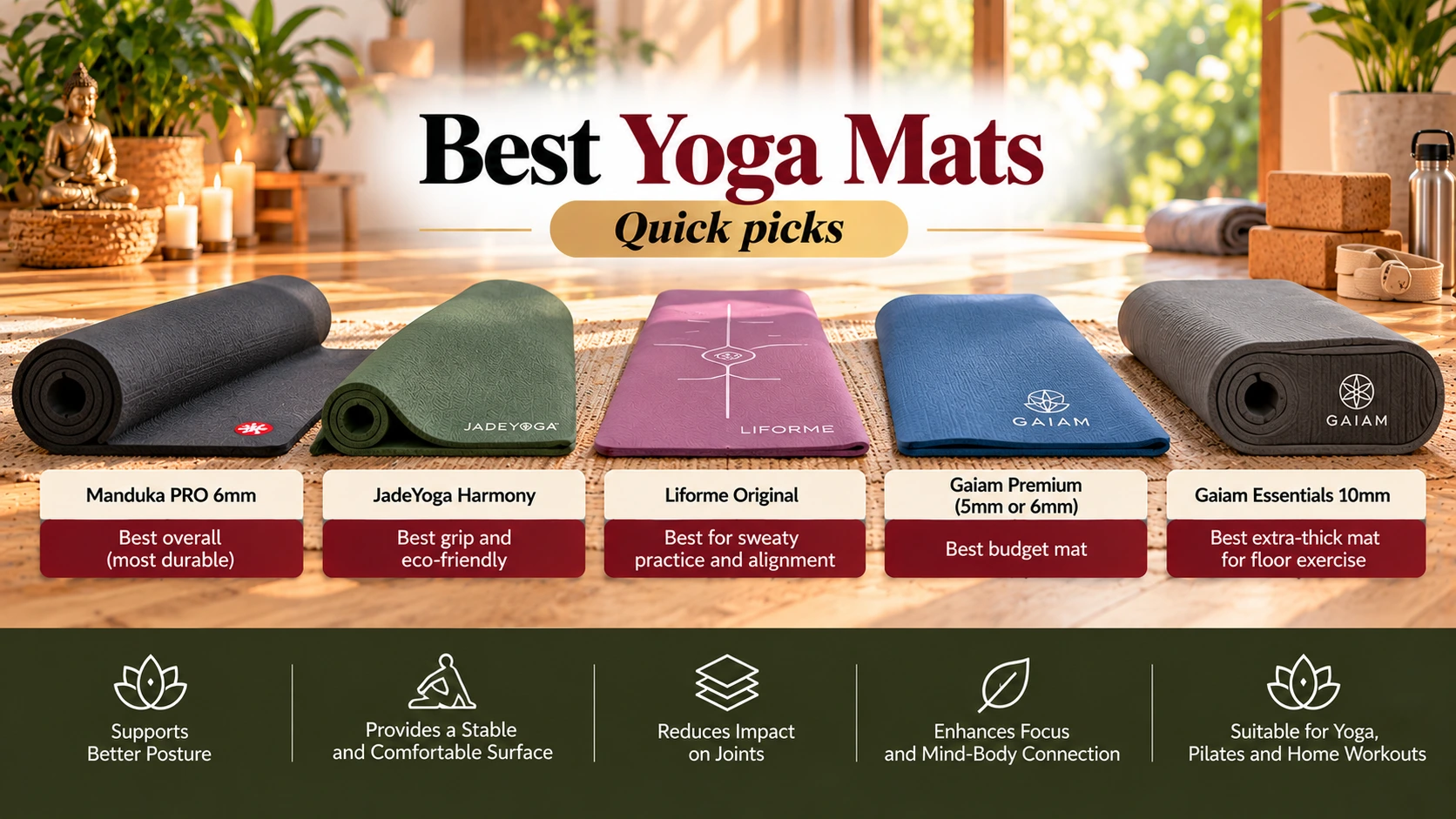
Quick picks
- Best overall (most durable): Manduka PRO 6mm
- Best grip and eco-friendly: JadeYoga Harmony
- Best for sweaty practice and alignment: Liforme Original
- Best budget mat: Gaiam Premium (5mm or 6mm)
- Best extra-thick mat for floor exercise: Gaiam Essentials 10mm
Disclosure: As an Amazon Associate, I earn from qualifying purchases. This costs you nothing extra.
Why the right mat matters
You don’t need much to move at home: some floor space and a good mat. But a cheap, slippery mat makes every pose harder, and a thin one leaves your knees and wrists sore. Many people quit home practice simply because their mat is uncomfortable.
This guide compares the best yoga mats by grip, cushioning, and material, and explains which type suits your practice and budget.
How we chose: We have not tested these mats ourselves. Our picks are based on manufacturer specifications, hands-on reviews from independent testers such as Yoga Journal and OutdoorGearLab, and patterns in verified buyer feedback.
Comparison table
| Mat | Thickness | Material | Grip | Weight | Best for | Price tier |
| Manduka PRO | 6mm | Closed-cell PVC (OEKO-TEX certified) | Good after break-in | About 7.5 lb | Daily home practice, durability | Premium |
| JadeYoga Harmony | About 5mm | Natural rubber | Excellent | About 5 lb | Grip, eco-conscious buyers | Premium |
| Liforme Original | 4.2mm | Eco-polyurethane top, natural rubber base | Excellent, even when sweaty | About 5.5 lb | Hot yoga, alignment | Premium |
| Gaiam Premium | 5 or 6mm | Latex-free PVC | Fair | About 3 lb | Beginners on a budget | Budget |
| Gaiam Essentials | 10mm | NBR foam | Fair | Light | Floor exercises, sensitive knees | Budget |
Price tiers: Budget = usually under $35; Premium = $95 and up. Check live prices on Amazon.
Why move at home: what the research says
Yoga and other exercise can lift mood. A 2024 network meta-analysis in The BMJ pooled 218 randomized trials with more than 14,000 people with depression. Walking or jogging, yoga, and strength training each produced moderate reductions in depressive symptoms compared with control conditions, and yoga and strength training were among the best tolerated. The authors rated their confidence in most estimates as low or very low, so treat the size of the effect with some caution. (Noetel et al., 2024)
Yoga may help back pain a little. A 2022 Cochrane review found low- to moderate-certainty evidence that yoga produces small to moderate improvements in back-related function at three to six months compared with no exercise, and probably works about as well as other back-focused exercise. (Wieland et al., 2022)
The practical message: the best exercise is the one you’ll keep doing. A comfortable mat in a spot you see every day removes one more excuse. For ideas on starting small, read how exercise changes your brain.
If you have depression or ongoing back pain, use exercise alongside professional care, not instead of it.
How to choose a yoga mat
- Thickness. About 4–6mm suits most people: enough cushioning for knees, but firm enough for balance. Choose 8–10mm for floor exercises or sensitive joints, accepting that thick mats feel less stable in standing poses.
- Grip. Natural rubber and polyurethane tops grip best, especially with sweaty hands. PVC can feel slippery at first and improves with use.
- Material.
- PVC: durable and affordable, but not eco-friendly.
- Natural rubber: excellent grip and more sustainable, but heavier, has a rubber smell at first, and isn’t suitable if you have a latex allergy.
- NBR or TPE foam: soft and light, but less durable.
- Open- or closed-cell. Open-cell mats absorb sweat and grip well but need regular cleaning. Closed-cell mats resist moisture and are more hygienic.
- Size. Taller people should look for a long mat (at least 71 inches / 180 cm).
- Weight. If you’ll carry it to classes, a lighter mat matters. For home use, heavier mats stay flat and last longer.
The 5 best yoga mats in 2026
1. Manduka PRO 6mm: Best overall
Best for: Daily home practice and anyone who wants a mat that lasts for years.
The Manduka PRO is a favorite of yoga teachers and the top-rated mat in OutdoorGearLab’s testing. Its dense 6mm closed-cell PVC gives firm, even cushioning, resists sweat and odor, and comes with a lifetime guarantee. It’s OEKO-TEX Standard 100 certified.
Key specs: 6mm, closed-cell PVC, about 7.5 lb, lifetime guarantee.
What we like
- Exceptionally durable
- Dense, supportive cushioning
- Hygienic closed-cell surface
What could be better
- Heavy to carry
- Slippery until broken in; grip improves with use
2. JadeYoga Harmony: Best grip and eco-friendly
Best for: People who want instant, reliable grip and natural materials.
The Harmony is made from natural rubber and is known for its sticky, non-slip grip. Jade also plants a tree for every mat sold.
Key specs: About 5mm, natural rubber, open-cell.
What we like
- Outstanding grip from day one
- Natural, more sustainable material
What could be better
- Rubber smell for the first few weeks
- Not suitable for latex allergies
- Degrades in direct sunlight; needs regular cleaning
3. Liforme Original: Best for sweaty practice and alignment
Best for: Hot yoga, vinyasa, and anyone who wants alignment guides.
Yoga Journal names the Liforme its top pick for hot yoga. It pairs an eco-polyurethane top with a natural rubber base and is printed with alignment markers that help you position your hands and feet consistently.
Key specs: 4.2mm, eco-polyurethane and natural rubber, alignment markers.
What we like
- Excellent grip even when wet
- Alignment markers help beginners
What could be better
- The most expensive mat here
- Thinner cushioning than the Manduka PRO
4. Gaiam Premium: Best budget mat
Best for: Beginners who want a decent mat without a big spend.
Yoga Journal’s experts recommend the Gaiam Premium as the best budget mat. It’s light, comes in 5mm and 6mm versions, and is made from latex-free PVC.
Key specs: 5 or 6mm, latex-free PVC, about 68 × 24 inches.
What we like
- Very affordable
- Light and easy to store
What could be better
- Less grip with sweaty hands
- Wears out faster than premium mats
5. Gaiam Essentials 10mm: Best extra-thick mat
Best for: Floor exercises, stretching, and people with sensitive knees.
At 10mm, this foam mat is very cushioned, which suits Pilates, stretching, and floor workouts. It comes with a carrying strap.
Key specs: 10mm, NBR foam, carry strap.
What we like
- Soft and comfortable for knees
- Low price
What could be better
- Too squishy for balance poses
- Less durable than rubber or PVC
For readers in India: Premium brands are sold on Amazon.in through importers at higher prices. Indian brands offer many affordable TPE and NBR mats; look for at least 5–6mm thickness, a textured non-slip surface, and a length of 180 cm or more.
Small add-ons for a home workout corner
A mat is enough to start. If you want to expand, these inexpensive extras are the most useful:
| Add-on | What it helps with |
| Yoga blocks (foam or cork) | Bring the floor closer in stretches; useful for beginners and stiff hips |
| Yoga strap | Extends your reach in forward bends and shoulder stretches |
| Resistance bands (loop and long) | Simple strength training at home, a form of exercise that research links to better mood |
| A pair of light dumbbells | Strength exercises for arms, shoulders, and legs |
| Mat cleaner or a damp cloth | Keeps your mat grippy and fresh |
FAQs
What thickness of yoga mat is best?
About 4–6mm for most people. Go thicker (8–10mm) for floor work or sensitive knees, and thinner for travel or balance-focused practice.
Which yoga mat has the best grip?
Natural rubber and polyurethane-topped mats, such as the JadeYoga Harmony and Liforme, grip best, especially when your hands sweat.
Why is my new yoga mat slippery?
Some mats, especially PVC ones like the Manduka PRO, have a smooth surface at first. Grip improves with regular use; following the brand’s break-in advice helps.
Are natural rubber mats safe for latex allergies?
No. Natural rubber contains latex. Choose PVC, TPE, or other latex-free mats instead.
How do I clean a yoga mat?
Wipe it with a damp cloth or a mat cleaner after use, and let it air-dry away from direct sunlight. Follow the brand’s instructions, especially for rubber mats.
How often should I replace my yoga mat?
When it starts to flake, loses grip, or flattens noticeably. Budget mats may last a year or two of regular use; premium PVC mats can last many years.
Can I use a yoga mat for other workouts?
Yes. Mats work well for stretching, Pilates, and bodyweight exercises. For high-impact workouts or heavy weights, a thicker exercise mat may be better.
Final verdict
The Manduka PRO is the best yoga mat for most home practitioners: durable, supportive, and built to last. If grip matters most, choose the JadeYoga Harmony; for sweaty practice, the Liforme. On a budget, the Gaiam Premium is a solid start.
Unroll it somewhere you’ll see it every day, and start with ten minutes.
Disclosure: As an Amazon Associate, I earn from qualifying purchases. Product details were checked in October 2026 and may change; always confirm specs on the product page.
Check with a doctor before starting a new exercise routine if you have a health condition or injury.
References
- Noetel M, et al. (2024). Effect of exercise for depression: systematic review and network meta-analysis of randomised controlled trials. BMJ, 384, e075847. doi:10.1136/bmj-2023-075847
- Wieland LS, et al. (2022). Yoga for chronic non-specific low back pain. Cochrane Database of Systematic Reviews, Issue 11, CD010671. doi:10.1002/14651858.CD010671.pub3
- Yoga Journal. The best yoga mats. yogajournal.com
- OutdoorGearLab. The best yoga mats. outdoorgearlab.com