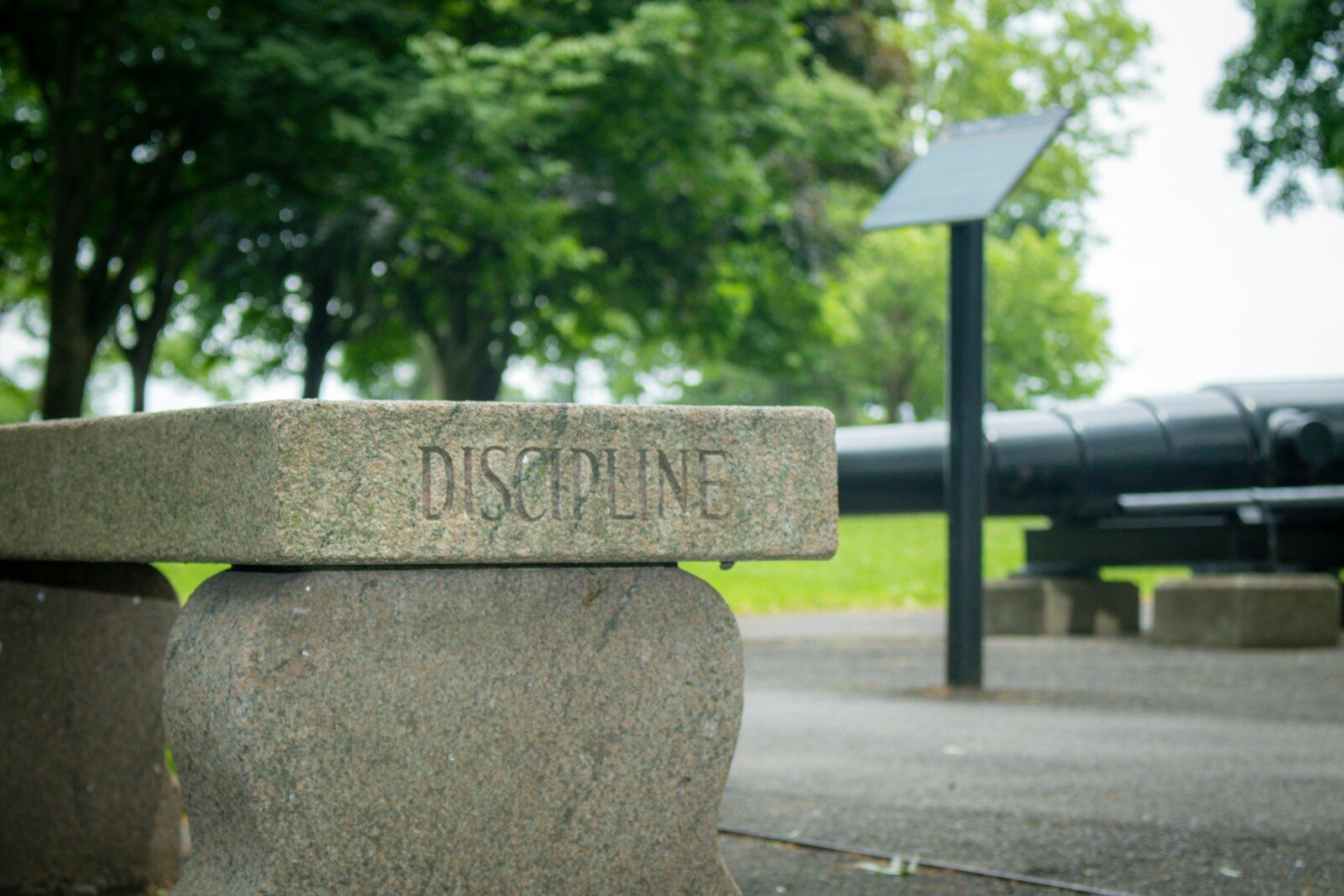
Here’s the brutal truth about motivation: it’s a feeling, not a system. Feelings fluctuate. Some mornings you wake up fired up; most mornings you don’t. If your productivity depends on motivation, you will always be at its mercy.
Discipline is different. Discipline is a skill — a neural pathway built through repetition that makes the right action automatic, regardless of how you feel. And unlike motivation, it compounds over time.
“Motivation gets you started. Discipline keeps you going.” — Jim Ryun
The Science: Motivation vs. Discipline
Motivation is dopamine-driven — it spikes when a reward feels near and crashes when it doesn’t. This is why you feel motivated when you set a New Year’s goal (the reward feels vivid and close) and unmotivated six weeks later (the reward seems distant and abstract).
Discipline, by contrast, operates through the basal ganglia and prefrontal cortex — the brain’s habit and executive function centers. When a behavior is repeated consistently in the same context, it becomes encoded as an automatic pattern, requiring less and less willpower to execute. This is the neurological definition of habit.
The goal of building discipline is not to become a robot. It’s to automate the behaviors that align with your values so they require minimal mental energy to sustain.
Practical Steps to Build Real Discipline
1. Start Embarrassingly Small
The single greatest mistake people make is starting too big. Wanting to work out daily is noble; trying to go from zero to one hour at the gym immediately is a prescription for failure. Stanford researcher BJ Fogg’s work on ‘Tiny Habits’ shows that behaviors that require minimal effort are the ones that stick — and grow over time.
Start with two minutes of meditation. One push-up. Opening the document without writing a word. Anchor it to an existing habit (after brushing teeth, before morning coffee). Let consistency be the win — duration and intensity come later.
2. Remove Willpower From the Equation
Willpower is a finite resource (a concept called ego depletion, demonstrated by Roy Baumeister at Florida State). Every decision you make depletes it slightly. The most disciplined people don’t rely on willpower — they design systems that eliminate the need for it.
Lay out your gym clothes the night before. Put your phone in another room. Keep healthy food at eye level and junk food out of the house. Prepare tomorrow’s task list today. Every friction you remove from a good habit, and every friction you add to a bad one, is worth ten motivational pep talks.
3. Standardize Before You Optimize
Don’t try to do something perfectly — try to do it consistently. A 30-minute mediocre workout done every day beats a perfect 90-minute workout done twice a week. Consistency creates the neural grooves; excellence fills them in later.
4. Use Identity-Based Motivation
James Clear’s research, popularized in Atomic Habits, shows that the most durable behavior change comes from identity shifts, not outcome goals. Instead of ‘I want to run a marathon,’ tell yourself ‘I am a runner.’ Instead of ‘I want to write a book,’ say ‘I am a writer.’ Every disciplined action then becomes evidence of who you are, not just what you want.
5. Track and Celebrate Small Wins
The brain releases dopamine not just when we achieve big goals, but when we make progress — even tiny progress. Tracking your consistency (a simple calendar X system) provides daily dopamine hits that reinforce the behavior. Never miss twice — if you break the chain, the rule is to get back the very next day, no matter what.
6. Create Accountability
Social commitment is one of the most powerful behavior-change tools available. Telling another person your intention, using an accountability partner, or joining a community pursuing similar goals significantly increases follow-through. Humans are wired to maintain social consistency.
What Discipline Is Not
Discipline is not self-punishment. It’s not about being hard on yourself or grinding through pain. The most sustained discipline comes from systems, environment design, and identity — not from willpower and guilt. If your current approach to discipline feels like a constant battle, you’re fighting the wrong way.
The Bottom Line
Stop waiting to feel motivated. Build systems that make the right action the easy action. Start smaller than feels meaningful. Be consistent before being excellent. And remember: every small act of discipline is a vote for the person you’re becoming.