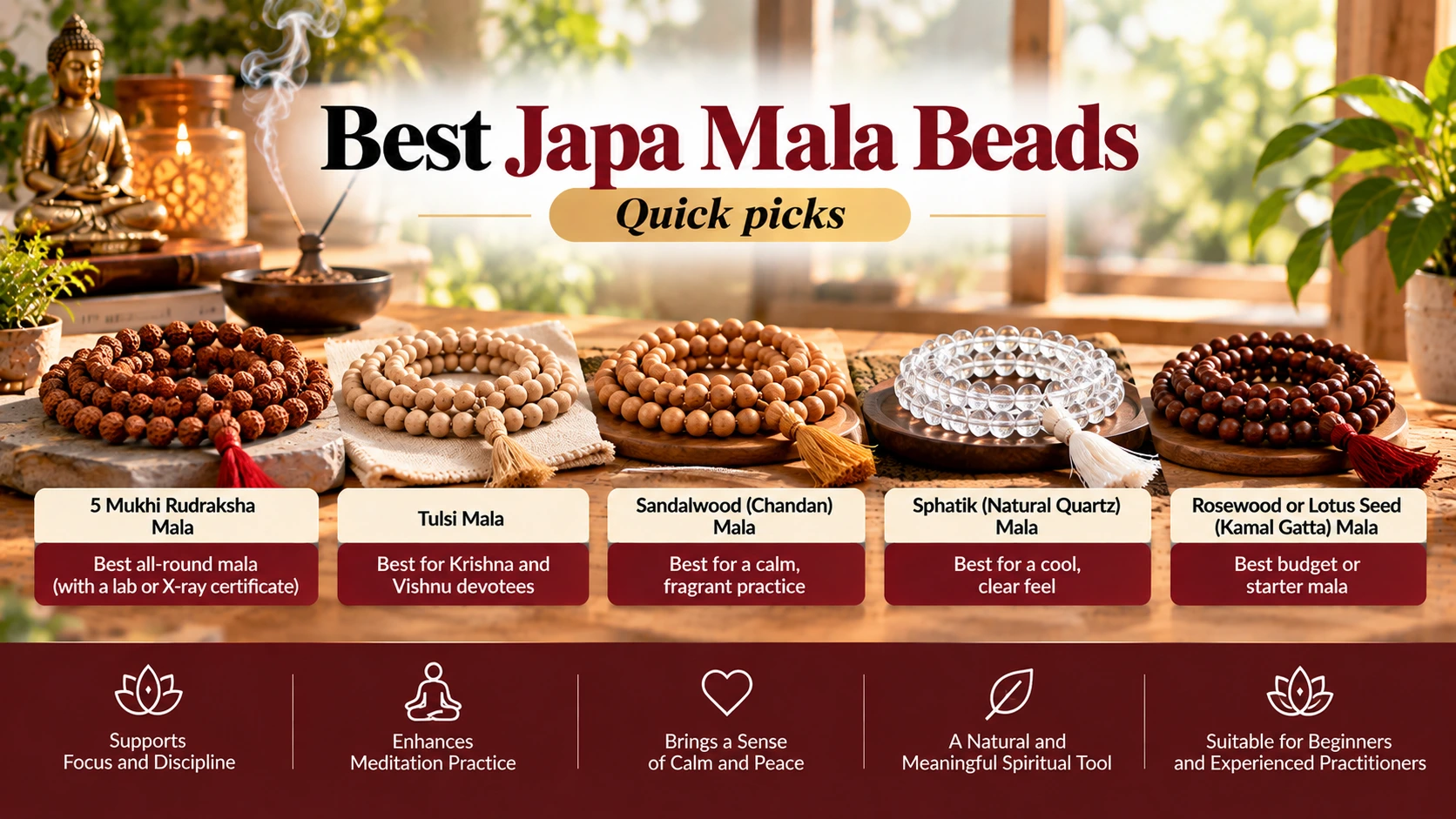
Quick picks
- Best all-round mala: 5 Mukhi Rudraksha mala (with a lab or X-ray certificate)
- Best for Krishna and Vishnu devotees: Tulsi mala
- Best for a calm, fragrant practice: Sandalwood (chandan) mala
- Best for a cool, clear feel: Sphatik (natural quartz) mala
- Best budget or starter mala: Rosewood or lotus seed (kamal gatta) mala
Disclosure: As an Amazon Associate, I earn from qualifying purchases. This costs you nothing extra.
Why the right mala matters
If you chant a mantra daily, your mala is something you’ll hold thousands of times. Yet buying one online is confusing. Amazon.in lists hundreds of “original” rudraksha and sphatik malas, and many are not what they claim.
This guide helps you choose a japa mala that suits your practice and your tradition, spot the common fakes, and use it correctly. We’ll also look at what research says about mantra meditation, so you know what to realistically expect.
How we chose: These recommendations are based on traditional usage, guidance on authentication from rudraksha and gemstone sources, and published research on mantra meditation. Spiritual meaning varies by tradition and lineage. Where your guru or tradition gives specific guidance, follow it over any general advice here.
Comparison table
| Mala type | Material | Best for | Feel and weight | Fake risk | Price tier |
| 5 Mukhi Rudraksha | Natural seed of the rudraksha tree | Shiva mantras, general daily japa | Textured, medium weight | High | Mid |
| Tulsi | Holy basil wood | Krishna and Vishnu mantras | Smooth, very light | Medium | Budget |
| Sandalwood | Fragrant wood | Calm, everyday practice | Smooth, light, mild scent | High (scented imitations) | Budget to mid |
| Sphatik | Natural clear quartz | A cool, clear feel; meditation | Smooth, cool, heavier | High (glass imitations) | Mid |
| Rosewood / lotus seed | Wood or seed | Beginners, travel, gifting | Light and durable | Low | Budget |
Price tiers on Amazon.in: Budget = usually under ₹500; Mid = ₹500–₹2,500. Certified and larger-bead malas cost more. Check live prices before buying.
What is a japa mala, and why 108 beads?
A japa mala is a string of prayer beads used to count repetitions of a mantra. Japa means repetition or murmuring, and mala means garland. Malas are used across Hindu, Buddhist, Jain, and Sikh traditions.
A traditional mala has 108 counting beads plus one larger bead, called the meru, sumeru, or guru bead. The meru is not counted. It marks the start and end of each round, and you can feel it with your eyes closed. (Hindutone; LA Yoga)
Why 108? There’s no single answer; different traditions give different meanings. In Hindu tradition, 108 is considered a sacred number, with explanations ranging from the 54 letters of the Sanskrit alphabet in masculine and feminine forms (54 × 2) to astronomical links. In Tibetan Buddhism, it is often connected to the 108 volumes of the Buddha’s teachings in the Kangyur, and practitioners may count 100 recitations with 8 extra to cover any mistakes. (Tibetan Nuns Project)
What the research says about mantra meditation
The mala itself is a counting tool. Its real value is that it frees your mind from keeping count, so your attention can stay on the mantra. What does science say about the practice it supports?
- A 2018 systematic review in the European Journal of Integrative Medicine looked at mantra meditation in healthy, non-clinical groups. It found minimal to moderate benefits for mental health, such as lower stress and anxiety. But it rated over 90% of the studies as weak in quality. (Lynch et al., 2018)
- A 2022 meta-analysis found that mantra-based meditation produced small-to-moderate reductions in mental health symptoms, including anxiety and post-traumatic stress, while noting risk of bias in the studies. (Álvarez-Pérez et al., 2022)
In short: regular mantra practice may help you feel calmer, and the research is promising but not yet strong. A mala won’t do the work for you, but it makes daily practice easier to keep. For more ways to build that habit, see our meditation guides.
Choosing by material
Start with your tradition and the mantra you chant. If you follow a particular sampradaya or have a guru, ask which mala they recommend. If you don’t, choose by how the mala feels in your hand and how you’ll use it.
Rudraksha. Rudraksha beads are the dried seeds of the rudraksha tree, which grows mainly in Nepal, India, and Indonesia. They are closely associated with Shiva and are among the most widely used malas for japa. Each bead has natural vertical lines called mukhis (faces). The 5 Mukhi bead is the most common and affordable, which makes it a sensible choice for a full 108-bead mala.
Tulsi (holy basil). Tulsi malas are made from the wood of the sacred tulsi plant. They are traditionally used by devotees of Krishna and Vishnu, for example when chanting the Hare Krishna maha mantra. They’re very light and comfortable for long chanting sessions. Traditions often have specific customs for wearing and caring for tulsi, so learn those if you follow a Vaishnava path.
Sandalwood (chandan). Sandalwood malas are smooth, light, and have a soft, natural fragrance. Many people find the scent calming during practice. Good sandalwood smells gentle and lasting rather than strong and perfumed.
Sphatik (quartz crystal). A sphatik mala is made from natural clear quartz. It feels cool and smooth in the hand and is heavier than wood. Because glass looks similar, sphatik is one of the most commonly imitated malas.
Rosewood and lotus seed (kamal gatta). These are affordable, durable, and low-risk options. They’re a good choice for beginners, travel, or gifting, and for anyone who wants to build a habit before investing in a certified mala.
Bead size and stringing. Most japa malas use beads of about 5–8 mm. Smaller beads make a lighter, more portable mala; larger beads are easier to feel and count. Look for a mala that is knotted between beads, which keeps the beads spaced and protects them if the string breaks.
How to spot a genuine mala and avoid fakes
Rudraksha
- Skip the water test. The popular sink-or-float test is unreliable; both real and fake beads can sink or float depending on age and oil content. (Hindutone; MyRatna)
- X-ray testing is the most reliable check. Each mukhi of a genuine bead has a matching seed compartment inside. If the number of compartments doesn’t match the faces on the outside, the bead has likely been tampered with. (Hinduism Today)
- Look for a lab certificate that includes an X-ray image, ideally with a code you can verify online.
- Check the surface. Natural lines are slightly irregular. Perfectly clean, carved-looking grooves or artificial designs are warning signs. (Kalyan Jewellers)
- Be wary of rare beads at low prices. One Mukhi and other rare, high-value beads are frequent targets for forgery. A 5 Mukhi mala is far less likely to be manipulated.
Sphatik
- Look for bubbles. Tiny, perfectly round air bubbles inside a bead indicate glass, not natural quartz. Use a magnifying glass under bright light.
- Feel the temperature. Natural quartz feels cool and warms up slowly in your hand; glass warms faster. (Crystals.com)
Sandalwood
- Trust a gentle scent. Genuine sandalwood has a soft, lingering fragrance. An overpowering perfume smell, or a scent that disappears after a wipe, suggests cheap wood treated with synthetic fragrance. (Atelier Tibet)
On Amazon.in, check every listing for
- ☐ 108 beads plus a meru bead (count is stated clearly)
- ☐ Material named specifically, not just “natural beads”
- ☐ Bead size in mm
- ☐ A lab or X-ray certificate for rudraksha and sphatik
- ☐ Knotted stringing between beads
- ☐ Recent buyer photos and reviews that mention authenticity
- ☐ A clear return policy
The 5 best japa malas to buy
1. 5 Mukhi Rudraksha mala: Best all-round mala
Best for: Daily japa, Shiva mantras, and anyone who wants a traditional, long-lasting mala.
A 108-bead 5 Mukhi rudraksha mala is the classic choice. The textured beads are easy to feel as you count, and they darken and smooth with years of use. Because 5 Mukhi beads are plentiful, a genuine mala is affordable compared with rarer mukhis.
What to look for in the listing: 108 + 1 beads, bead size (5–8 mm is common for japa), an X-ray or lab certificate, and natural, irregular mukhi lines.
What we like
- Traditional and widely used for japa
- Durable; lasts for years with care
- Pleasant texture for counting
What could be better
- High risk of fakes without a certificate
- Rough texture can feel coarse at first
2. Tulsi mala: Best for Krishna and Vishnu devotees
Best for: Vaishnava practice, including chanting the Hare Krishna maha mantra.
Tulsi malas are light, smooth, and comfortable for long sessions or many rounds a day. They’re also affordable. If you follow a Vaishnava tradition, ask your community about the customs for using and wearing tulsi.
What to look for in the listing: genuine tulsi wood (not painted or generic wood), 108 + 1 beads, knotted stringing, and a cloth bead bag included.
What we like
- Very lightweight
- Comfortable for many rounds
- Low price
What could be better
- Wood can crack if it gets wet often
- Imitations made from other woods exist
3. Sandalwood (chandan) mala: Best for a calm, fragrant practice
Best for: Anyone who enjoys a gentle scent during meditation, and for everyday wear.
A sandalwood mala adds a quiet sensory anchor to your practice. Its smooth beads glide easily through the fingers, which suits fast or long japa.
What to look for in the listing: “natural sandalwood” stated clearly, a mild rather than strong scent in reviews, and smooth, evenly colored beads.
What we like
- Soothing natural fragrance
- Smooth and light
What could be better
- Many listings are scented imitation wood
- The scent fades over time
4. Sphatik (natural quartz) mala: Best for a cool, clear feel
Best for: People who prefer a smooth, cool, heavier mala.
A genuine sphatik mala feels distinctly cool and substantial. Choose a listing that states natural quartz and, ideally, includes a lab certificate, since glass versions are common.
What to look for in the listing: “natural quartz” or “certified sphatik,” a lab certificate, and buyer photos showing clear beads with natural inclusions rather than round bubbles.
What we like
- Cool, smooth, pleasant to hold
- Durable if handled with care
What could be better
- Glass fakes are widespread
- Heavier, and beads can chip if dropped
5. Rosewood or lotus seed (kamal gatta) mala: Best budget and starter mala
Best for: Beginners, travel, and gifting.
If you’re just starting a mantra practice, a simple wooden or lotus seed mala lets you build the habit without worrying about authenticity or price. Rosewood is tough and smooth; lotus seed malas are light and traditional.
What to look for in the listing: 108 + 1 beads, knotted stringing, and a durable cord.
What we like
- Inexpensive
- Low risk of fakes
- Durable for everyday use
What could be better
- Less traditional for some lineages than rudraksha or tulsi
Alternative: If you prefer not to use beads, a digital tally counter ring can count rounds. Many practitioners still prefer a mala for its tactile, meditative feel.
How to use and care for your mala
Using a japa mala
- Sit comfortably with your spine upright, in a quiet spot.
- Hold the mala in your right hand, draped over the middle finger. In many Hindu traditions, the index finger does not touch the beads. (Some Buddhist traditions hold the mala in the left hand; follow your own.)
- Start at the bead next to the meru, not on the meru itself.
- Recite your mantra once per bead, using your thumb to draw each bead toward you.
- When you reach the meru, don’t cross it. Turn the mala around and continue in the other direction for your next round.
- Begin small. How long a round of 108 takes depends on the length of your mantra. Start with one round a day and build from there.
Caring for your mala
- Store it in a cloth bag (often called a gomukhi or japa bag) to keep it clean and protected.
- Keep wooden malas dry. Tulsi and sandalwood can crack or lose their scent if they get wet often.
- Handle with respect. Traditionally, a mala is not placed on the floor or stepped over.
- Restring when worn. Daily use wears the thread. Replace it before it breaks to avoid losing beads.
- Clean gently. Wipe beads with a soft dry cloth. Follow your seller’s or tradition’s guidance for any oiling of rudraksha.
Pair your daily round with a steady routine. Our guide to the best morning routine shows how to fit a short practice into your day.
FAQs
How many beads should a japa mala have?
A traditional japa mala has 108 counting beads plus one meru (guru) bead, which is not counted. Shorter wrist malas of 27 or 54 beads also exist, and you go around them several times to reach 108.
Which mala is best for beginners?
A 5 Mukhi rudraksha mala is a classic all-round choice. If you want something inexpensive while you build the habit, a rosewood or lotus seed mala works well. If you follow a specific tradition, use the mala it recommends.
How can I tell if a rudraksha mala is original?
Don’t rely on the water test. The most reliable check is an X-ray, which shows whether the internal seed compartments match the outer faces. Buy malas that come with a lab certificate including an X-ray image.
Can I wear my japa mala?
Many people do, but customs vary. Some traditions keep a chanting mala separate and only for japa, while others wear it. Follow your tradition or teacher.
Why shouldn’t I cross the meru bead?
The meru marks the head of the mala and is treated with respect. Traditionally, you turn the mala around at the meru instead of passing over it.
Does chanting with a mala have proven benefits?
Research suggests mantra meditation can produce small-to-moderate improvements in stress, anxiety, and well-being, though many studies are of limited quality. The mala itself helps by keeping count, so your attention stays on the mantra.
Can I use a mala for affirmations or breath counting?
Yes. Many people use a mala to count affirmations or breaths. Its tactile rhythm helps keep attention steady.
Final verdict
For most people, a certified 5 Mukhi rudraksha mala is the best all-round japa mala: traditional, durable, and pleasant to count on. Krishna and Vishnu devotees will feel most at home with a tulsi mala, while a simple rosewood or lotus seed mala is a low-cost way to start.
Whichever you choose, buy from a listing with clear details and, for rudraksha or sphatik, a lab certificate. Then begin with one round a day.
Disclosure: As an Amazon Associate, I earn from qualifying purchases. Information checked in October 2026.
Traditions differ in how malas are chosen, used, and worn. This guide offers general information; please follow the guidance of your own tradition or teacher.
References
- Lynch J, et al. (2018). Mantra meditation for mental health in the general population: A systematic review. European Journal of Integrative Medicine, 23, 101–108. doi:10.1016/j.eujim.2018.09.010
- Álvarez-Pérez Y, et al. (2022). Effectiveness of mantra-based meditation on mental health: A systematic review and meta-analysis. International Journal of Environmental Research and Public Health, 19(6), 3380. doi:10.3390/ijerph19063380
- Hinduism Today. (2016). How common are fake rudrakshas? hinduismtoday.com
- Tibetan Nuns Project. How to use a Tibetan mala. tnp.org
- Hindutone. Japa mala: a complete guide to the sacred rosary. hindutone.com
- Hindutone. Rudraksha mukhi types and real vs fake authentication. hindutone.com
- Kalyan Jewellers. Rudraksha guide. kalyanjewellers.net
- Crystals.com. How to spot fake crystals. crystals.com
- Atelier Tibet. How to recognize genuine sandalwood malas. ateliertibet.ch